AI Ethics in Creative Industries: 4 Dilemmas for American Artists 2026
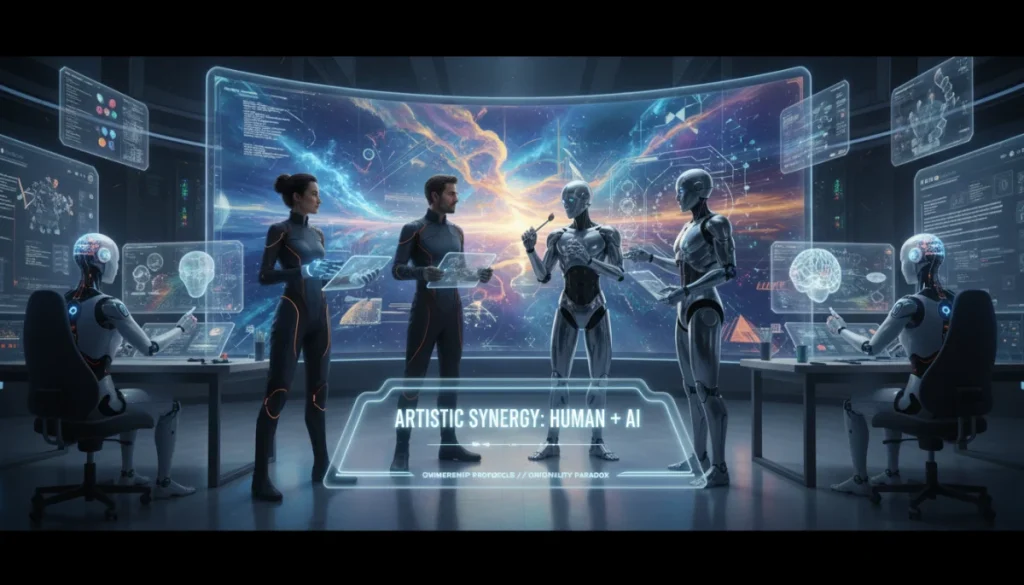
The rapid integration of AI into creative industries presents significant ethical challenges and cultural dilemmas for American artists in 2026, impacting originality, intellectual property, economic viability, and the very definition of art.
Por: Maria Eduarda em 13 de maio de 2026
Advertisements
The rapid integration of AI into creative industries presents significant ethical challenges and cultural dilemmas for American artists in 2026, impacting originality, intellectual property, economic viability, and the very definition of art.
As we approach 2026, the discussion around the ethics of AI in creative industries has intensified, becoming a critical focal point for American artists. The rapid integration of artificial intelligence into artistic creation, distribution, and consumption raises profound questions that challenge traditional notions of authorship, originality, and economic sustainability for creators.
Advertisements
The concept of originality in an AI-driven landscape
The advent of AI has fundamentally reshaped our understanding of originality in the creative sphere. Where does the line blur between AI-assisted creation and truly human ingenuity? This question is at the heart of many debates, as algorithms can now generate highly convincing and aesthetically pleasing works across various mediums.
AI models are trained on vast datasets of existing human-created content. This process allows them to learn patterns, styles, and techniques, which they then use to produce new outputs. While these outputs can be novel in their combination of elements, their foundational components are derived from human effort. This raises concerns about whether AI-generated art can truly be considered original, or if it is merely a sophisticated form of pastiche or remixing.
Defining originality in the AI era
Historically, originality in art has been linked to the unique vision and interpretation of a human creator. It implies a novel contribution, a fresh perspective, or a groundbreaking technique. With AI, the ‘creator’ is an algorithm, and its ‘vision’ is a statistical aggregation of its training data. This distinction is crucial for understanding the ethical implications.
Algorithmic derivation: AI systems derive their output from existing data, making pure originality a complex claim.
Human intent: The human element often shifts from direct creation to prompt engineering or curation of AI outputs.
Perception of novelty: While AI outputs might appear new, their underlying mechanisms are imitative.
The challenge for American artists, particularly by 2026, is navigating a market where AI can rapidly produce variations of popular styles or generate content that mimics specific artists. This not only devalues the concept of unique artistic voice but also creates a competitive landscape where human artists struggle to assert the distinctiveness of their work.
Furthermore, the speed and scale at which AI can generate content mean that the market could become saturated with similar aesthetics, potentially stifling genuine innovation. Artists might find themselves pressured to adopt AI tools to keep up, further blurring the lines of what constitutes original work and who deserves credit for it. The conclusion here is that the definition of originality needs urgent re-evaluation to accommodate the new realities of AI creation, ensuring that human creativity remains valued and protected.
Intellectual property and copyright challenges
The realm of intellectual property (IP) and copyright is perhaps the most legally contentious area when discussing AI in creative industries. Existing copyright laws were not designed with AI in mind, leading to significant ambiguities and disputes over ownership and infringement.
One of the primary concerns is the training data used by AI models. If an AI is trained on copyrighted material without explicit permission or compensation to the original creators, does the AI’s output constitute a derivative work that infringes upon those copyrights? This question has led to numerous lawsuits and calls for legislative reform, as artists seek to protect their past and future works from unauthorized use by AI systems.
Who owns AI-generated content?
Currently, there is no universally accepted legal framework for determining ownership of AI-generated content. Different jurisdictions are attempting to address this, but the answers vary. Some argue that the human who prompts or directs the AI should be considered the author, while others contend that no one can claim copyright if the work is primarily machine-generated.
Prompt engineer ownership: The individual providing the prompts or parameters to the AI.
AI developer ownership: The company or individual who created the AI model.
Public domain: The idea that AI-generated content should automatically enter the public domain.
For American artists, this uncertainty creates immense vulnerability. If their work is used to train AI models without consent, and the AI then produces similar content that competes in the market, their livelihood is directly threatened. Moreover, if they use AI tools themselves, the question of their own copyright over the resulting work becomes murky. This lack of clarity can deter innovation and investment in creative endeavors, as artists become hesitant to create if their IP rights are not secure.
By 2026, it is anticipated that legal battles regarding AI and copyright will intensify, pushing governments and international bodies to establish clearer guidelines. The challenge will be to balance the promotion of technological innovation with the protection of human artistic rights, ensuring that creators are fairly compensated and recognized for their contributions. The implications for intellectual property are profound, demanding new legal paradigms.
Economic impacts on artists’ livelihoods
The economic ramifications of AI integration are a pressing concern for American artists. While AI offers new tools and efficiencies, it also poses a significant threat to traditional income streams and job security within the creative industries. The ability of AI to generate content rapidly and at a lower cost can drive down market prices for creative work, making it harder for human artists to compete.
Freelance artists, illustrators, composers, and writers are particularly susceptible. Companies might opt for AI-generated content for routine tasks, commercial art, or background music, reducing the demand for human talent. This shift could lead to a devaluation of creative skills and a substantial decrease in earning potential for many artists, forcing them to adapt or face economic hardship.
Displacement and new opportunities
While some fear widespread job displacement, others point to the potential for AI to create new roles and opportunities. Artists might become AI prompt engineers, curators of AI outputs, or specialists in refining AI-generated content. However, these new roles often require different skill sets, and the transition might not be seamless for all.
Reduced demand for traditional roles: AI can automate tasks previously done by human artists.
Pressure on pricing: AI-generated content can be cheaper, leading to reduced rates for human work.
Skill gap: New AI-related roles require different expertise, creating a potential barrier for some artists.
The economic impact also extends to the value of art itself. If art can be mass-produced by machines, does its perceived value diminish? This question is not merely philosophical but has direct economic consequences for galleries, collectors, and the entire art ecosystem. Ensuring fair compensation for human artists in an AI-dominated market requires innovative solutions, such as new licensing models, universal basic income for artists, or robust collective bargaining agreements.
By 2026, the economic landscape for artists will likely be highly stratified, with those who successfully adapt to AI tools potentially thriving, while others struggle to find their footing. It is crucial for policymakers and industry leaders to address these economic disparities proactively, providing support and pathways for artists to navigate this evolving environment. The economic viability of a human-led creative sector hangs in the balance.
Cultural preservation and artistic authenticity
Beyond economic and legal concerns, AI raises profound questions about cultural preservation and artistic authenticity. Art has always served as a reflection of human experience, history, and cultural identity. When AI becomes a significant contributor to creative output, the nature of this reflection changes, potentially impacting how culture is created, transmitted, and understood.
There’s a risk that AI, trained on dominant cultural datasets, could perpetuate biases or homogenize artistic styles, leading to a loss of diversity and unique cultural expressions. Minority cultures, indigenous art forms, and niche artistic traditions might struggle to gain visibility if AI prioritizes mainstream or statistically common aesthetics. This could lead to a flattening of cultural landscapes, where the rich tapestry of human creativity is replaced by algorithmically optimized content.
Maintaining human touch in art
The concept of artistic authenticity is deeply tied to the human condition—the struggles, emotions, and unique perspectives that artists imbue into their work. Can an AI truly replicate this ‘human touch’? While AI can mimic human emotional expression, it does not possess consciousness or lived experience, raising questions about the depth and meaning of AI-generated art.
Bias perpetuation: AI models can amplify biases present in their training data, impacting cultural representation.
Homogenization of styles: Over-reliance on AI might lead to a reduction in diverse artistic expressions.
Loss of human narrative: AI-generated art lacks the personal stories and experiences of human creators.
For American artists, particularly those from diverse backgrounds, the challenge is to assert the value of their unique cultural narratives and artistic voices in a world increasingly influenced by AI. It requires a conscious effort to prioritize human-led creation, foster diverse artistic communities, and advocate for ethical AI development that respects and promotes cultural variety.
By 2026, the debate around cultural preservation will likely focus on how to integrate AI tools responsibly, ensuring they augment rather than diminish human creativity and cultural richness. This includes developing AI models with diverse training data, promoting transparency in AI art creation, and establishing ethical guidelines that prioritize human artistic expression. The goal is to ensure that AI serves as a tool to enhance, not erase, the authentic human voice in art.
Ethical AI development and responsible innovation
Addressing the dilemmas posed by AI in creative industries necessitates a focus on ethical AI development and responsible innovation. This means not just building more powerful AI, but building AI that is designed with human values, fairness, and artistic integrity at its core. It requires a multidisciplinary approach involving technologists, artists, ethicists, legal experts, and policymakers.
One key aspect of ethical AI development is transparency. Artists and the public need to know when content is AI-generated or AI-assisted. This can help maintain trust, inform audiences, and allow for proper attribution. Transparency also extends to the training data used by AI models; knowing the sources of data can help identify and mitigate biases, and ensure fair compensation for original creators whose work contributes to AI training.
Establishing ethical guidelines and frameworks
The creation of robust ethical guidelines and regulatory frameworks is crucial for navigating the evolving landscape of AI in art. These guidelines should address issues such as data provenance, intellectual property rights, attribution, and the prevention of artistic plagiarism. International collaboration will be essential, as AI technology transcends national borders.
Transparency in AI generation: Clear disclosure of AI involvement in creative works.
Fair compensation for data: Mechanisms to compensate artists whose work trains AI models.
Bias mitigation: Developing AI that avoids perpetuating cultural or artistic biases.
Responsible innovation also involves empowering artists with the knowledge and tools to engage with AI effectively. Educational initiatives and accessible AI platforms can help artists leverage AI as a creative assistant rather than seeing it solely as a threat. This fosters a collaborative environment where human creativity remains central, even as AI tools become more sophisticated.
By 2026, the focus will be on fostering a culture of responsible AI development that prioritizes human flourishing and artistic expression. This proactive approach will be vital in shaping a future where AI serves as a powerful catalyst for creativity, rather than a disruptive force that undermines the foundations of the creative industries. Ethical development is not an afterthought but a foundational principle.
The imperative for artist advocacy and policy reform
In the face of these transformative changes, artist advocacy and proactive policy reform are more critical than ever. American artists, individually and collectively, must engage with legislators, technology developers, and legal experts to ensure their voices are heard and their concerns are addressed. Without strong advocacy, the rapid pace of technological advancement could leave artists vulnerable and marginalized.
This includes advocating for updated copyright laws that specifically address AI-generated content and the use of copyrighted material in AI training. It also involves pushing for policies that support artists’ economic stability, such as fair licensing models, grants for human-led art projects, and protections against algorithmic exploitation. Artists need to be at the table when these policies are being shaped, bringing their unique perspectives to the discussion.
Building artist-led initiatives
Beyond policy, artists can also lead initiatives that foster ethical AI use within their communities. This could involve creating open-source AI tools that prioritize artist rights, developing ethical AI art platforms, or establishing networks for sharing best practices and supporting one another through the transition. Collective action can empower artists to shape the future of their industries.
Legislative engagement: Actively participating in discussions on AI policy and copyright reform.
Developing ethical standards: Artists collaborating to set industry-specific guidelines for AI use.
Community building: Creating support systems and educational resources for artists navigating AI.
The imperative for advocacy also extends to public education. Raising awareness among consumers about the ethical implications of AI-generated content can influence market demand and encourage support for human artists. By highlighting the value of authentic human creativity, artists can help shape a cultural environment that appreciates and rewards human artistic effort.
By 2026, the strength of artist advocacy will largely determine the trajectory of AI’s integration into creative industries. A united front, combined with thoughtful policy reform, can ensure that AI becomes a tool that enhances rather than diminishes the vibrant landscape of American art. This proactive engagement is essential for safeguarding the future of human creativity.
Education and adaptation for the future artist
For American artists to thrive in an AI-integrated world, education and continuous adaptation are paramount. The skills required for artistic success are evolving, and artists must be prepared to learn new tools, understand AI capabilities, and strategically integrate these technologies into their creative processes. This doesn’t mean becoming AI programmers, but rather becoming adept at collaborating with AI.
Educational institutions, art schools, and professional development programs have a crucial role to play in preparing the next generation of artists. Curricula need to be updated to include modules on AI ethics, prompt engineering, data literacy, and the legal implications of AI in art. Equipping artists with these skills will enable them to harness AI’s potential while mitigating its risks.
Lifelong learning and skill development
The pace of AI development means that lifelong learning will be a necessity. Artists will need to continuously update their knowledge and skills to stay relevant and competitive. This could involve attending workshops, online courses, or participating in artist communities focused on AI integration. The ability to adapt and evolve will be a key differentiator.
AI literacy: Understanding how AI works and its implications for artistic creation.
Prompt engineering: Mastering the art of communicating with AI models to achieve desired creative outputs.
Ethical considerations: Developing a strong ethical compass for using and interpreting AI tools.
Furthermore, adaptation means embracing new forms of artistic expression that emerge from the human-AI collaboration. This could lead to entirely new genres, mediums, and aesthetic movements that push the boundaries of what is currently possible. Artists who are open to experimentation and comfortable with technological integration will be at the forefront of this evolution.
By 2026, the artists who successfully navigate the AI landscape will likely be those who view AI as a powerful creative partner rather than a replacement. Education, coupled with a proactive mindset towards adaptation, will be the cornerstone of a resilient and innovative artistic community. This continuous learning journey will define the successful artist of tomorrow.
Key Dilemma
Brief Description
Originality Redefined
AI challenges traditional notions of unique human artistic creation, blurring lines between AI-assisted and human-generated work.
Intellectual Property
Uncertainty over copyright ownership for AI-generated content and the use of copyrighted data for AI training models.
Economic Impact
Potential for job displacement, devaluation of human artistic skills, and pressure on traditional income streams for artists.
Cultural Authenticity
Risk of homogenization of styles, perpetuation of biases, and loss of unique cultural expressions in AI-influenced art.
Frequently asked questions about AI and creative ethics
How does AI challenge the concept of artistic originality?▼
AI challenges originality by generating outputs based on vast datasets of existing human art. This raises questions about whether AI creations are truly new or merely sophisticated derivations, making it harder to define unique artistic vision and authorship.
What are the main intellectual property concerns with AI-generated art?▼
Key concerns include who owns the copyright to AI-generated works, and whether AI training on copyrighted material constitutes infringement. Existing laws are ill-equipped, leading to legal disputes and a need for new regulatory frameworks.
How might AI impact the economic stability of American artists?▼
AI could lead to job displacement in routine creative tasks and drive down market prices for art, affecting artists’ income. While new roles may emerge, the transition requires new skills and proactive economic support for creators.
Can AI-generated art preserve cultural authenticity and diversity?▼
There’s a risk AI could homogenize styles or perpetuate biases from its training data, potentially diminishing cultural diversity and authentic human narratives. Ethical AI development with diverse datasets is crucial for preservation.
What steps can artists take to adapt to AI in the creative industries?▼
Artists should embrace lifelong learning, develop AI literacy, master prompt engineering, and engage in advocacy for policy reform. Viewing AI as a collaborative tool and adapting to new creative processes will be vital for future success.
Conclusion
The integration of AI into creative industries presents a complex tapestry of ethical challenges and cultural dilemmas for American artists by 2026. From redefining originality and navigating intellectual property minefields to understanding economic impacts and preserving cultural authenticity, the path forward requires thoughtful consideration and proactive engagement. It is clear that the future of art will involve a dynamic interplay between human creativity and artificial intelligence. By fostering ethical AI development, advocating for robust policy reforms, and embracing continuous education, artists can not only adapt but also thrive, ensuring that the human spirit of creation continues to flourish in an increasingly AI-driven world. The conversation is ongoing, and collective action will be key to shaping a future where technology empowers, rather than diminishes, artistic expression.
A journalism student and passionate about communication, she has been working as a content intern for 1 year and 3 months, producing creative and informative texts about decoration and construction. With an eye for detail and a focus on the reader, she writes with ease and clarity to help the public make more informed decisions in their daily lives.